


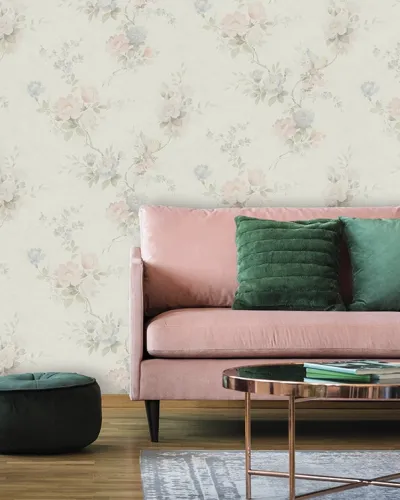

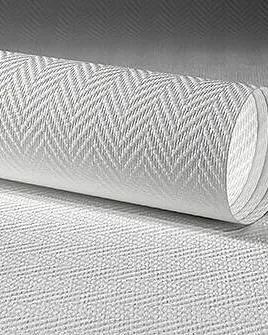

✅ Answer: Yes, all wallpapers, glass fiber wallcoverings, and decorative materials sold on our website are 100% authentic. They are sourced directly from official manufacturers and comply with international quality, CE, and indoor air quality standards.
✅ Answer: Orders placed on business days before 12:00 PM are handed over to the courier within 1–3 business days. Delivery within Germany usually takes 3–7 business days, while shipments to other EU countries take 3–10 business days. You will receive a tracking code via email once your order ships.
✅ Answer: You can return unopened standard products within 15 days of receipt. Items must be unused, in their original undamaged packaging, and with labels intact. Custom-made items (digital prints, custom murals) are non-returnable. Return shipping costs are the responsibility of the customer.
✅ Answer: When your order has been shipped, the tracking number will be sent to you by email. You can track your order on our website or on the courier company’s website.
✅ Answer: Yes, most of our vinyl and non-woven wallpapers are washable. They can be cleaned using a damp cloth or a soft sponge with mild soapy water. Avoid using harsh chemicals or abrasive brushes to protect the surface finish.
✅ Answer: All product photos are shot in professional studio lighting closest to daylight. However, slight color variations may occur due to screen settings and display technologies. If you wish to confirm the texture and shade before purchasing, you can request a live product video via WhatsApp.
✅ Answer: Wallpapers are produced in batches assigned with specific Batch/Lot numbers. Orders are always fulfilled using rolls from the same production lot. If you order again later, a different batch number may result in subtle shade differences. We recommend verifying your wall measurements with us beforehand.
✅ Answer: Our non-woven wallpapers feature "dry strippable" technology. When you want to remove them, simply pull the strip off the wall dry in one piece without damaging the plaster underneath or leaving residue. They are completely rental-friendly.
✅ Answer: Through our online store, we ship products worldwide. However, our professional installation services are available in Stuttgart, Böblingen, Ludwigsburg, Heilbronn, Neckarsulm, Weinsberg, Flein, Sinsheim and Heidelberg. Please contact our customer support for inquiries.
✅ Answer: No. Our Italian wallpaper collections feature the highest lightfastness certification. Thanks to advanced UV-resistant vinyl coatings, the colors, metallic accents, and embossed textures retain their vibrant intensity over many years, even in rooms with large windows receiving direct sunlight.
✅ Answer: Yes, fully. All Italian wallcoverings in our catalog meet strict EU building material standards and carry the CE mark. They are certified as flame-retardant (fire class B-s1, d0), making them safe for residential homes as well as commercial projects like hotels, restaurants, and corporate offices.
✅ Answer: Yes, for professional and long-lasting results, we highly recommend using a primer. It balances the surface porosity, ensures optimal adhesive bonding, and facilitates "dry stripping" when you decide to remove the wallpaper in the future.
✅ Answer: To ensure a flawless finish, the surface must be clean, dry, and smooth. If your wall has old paint or imperfections, it should be sanded and primed. Any cracks or holes in the plaster must be filled and smoothed before installation.
✅ Answer: No. Since we are based in Germany, all shipments to countries within the European Union (EU) fall under the free movement of goods principle. There are no customs duties or additional import taxes for customers in the EU.
✅ Answer: Work in strips, not square metres. Divide the wall width by the roll
width and round up – that's your number of strips. Add about 10 cm to the
ceiling height for trimming, and on patterned papers add the pattern repeat
as well. Divide the roll length by that strip length and round down to see
how many strips one roll gives you. Example: wall 4 m wide, 2.60 m high,
roll 0.53 × 10.05 m. 4 ÷ 0.53 = 7.55 → 8 strips. Strip length 2.70 m, so
3 strips per roll. 8 ÷ 3 = 2.67 → 3 rolls. Don't subtract doors and windows;
the offcuts rarely fit anywhere useful.
✅ Answer: The maths is the same as for 53 cm rolls, you just need fewer strips.
70 cm rolls are usually 10 m or 10.05 m long depending on the brand – check
the label. For a wall 4 m wide and 2.60 m high: 4 ÷ 0.70 = 5.71 → 6 strips.
Each roll gives 3 strips of 2.70 m, so 2 rolls will do. For a whole room use
the perimeter: a 3.5 × 4 m room has a 15 m perimeter. 15 ÷ 0.70 = 21.4 →
22 strips, 22 ÷ 3 = 7.33 → 8 rolls. The same room would take 10 rolls of
53 cm paper. Wider rolls mean fewer seams, but they're heavier to hang –
worth thinking about if you're working on your own.
✅ Answer: It depends on the backing. Non-woven (vlies) wallpaper needs a
non-woven wallpaper paste; for heavy, embossed or fabric-look papers a
reinforced heavy-duty version is the safer choice. Traditional paper-backed
wallpaper is fine with standard paste. Either way, check the symbols on the
roll label – they tell you which paste and which method to use. Mix the paste
exactly to the water ratio on the pack, make sure there are no lumps, and let
it stand for a few minutes. Paste that's too thin is one of the most common
reasons seams lift later.
✅ Answer: The big advantage of non-woven is that you paste the wall, not the
paper. The wall should be clean, dry and smooth; a coat of wallpaper primer
makes life much easier. Roll the paste onto an area slightly wider than one
strip. Don't start in a corner – hang the first strip against a vertical
line drawn with a spirit level or plumb line. Place the dry strip into the
paste and smooth it from the centre outwards with a brush or plastic
smoother. Butt the strips edge to edge; don't overlap them. Trim the excess
at ceiling and skirting with a sharp knife and wipe off any paste straight
away with a damp sponge.
✅ Answer: It simply means wallpaper designed and produced in Italy. The
wallpapers in our shop come from the Italian manufacturer Zambaiti Parati.
You usually notice the difference as soon as you touch it: deeper embossing,
very convincing fabric and stone textures, softer colour transitions. The
collections are built so that patterns and matching plain designs belong
together, which makes it easy to do one feature wall and keep the rest of the
room calm without it looking thrown together. Our papers have a non-woven
backing, so they're easy to hang and easy to remove later.
✅ Answer: The Zambaiti Parati wallpapers we sell have a non-woven backing and
measure 0.53 × 10.05 m, so it's paste-the-wall: paste on the wall, paper
goes on dry. Before you start, check the batch number (Parti No.) on every
label – different batches can differ slightly in shade. Also look at the
pattern match symbol: some designs have a straight match, others an offset
(drop) match. With an offset match each strip is cut half a repeat further
down than the previous one, so lay the strips side by side on the floor and
check the pattern before cutting. On embossed surfaces don't press hard with
a plastic smoother or you'll flatten the texture; a soft brush is enough.
✅ Answer: Both have their place. Paint is cheap, quick to refresh and makes
sense if you like changing colours often. What it can't really do is
texture: fabric, linen, concrete or stone effects are only possible with
special techniques and a lot of skill. Wallpaper gives you colour and texture
in one go and hides small imperfections better than paint. Because
non-woven papers strip off dry, you're not stuck with them forever either.
What we see most often in practice is a mix: one wall papered, the others
painted in a shade picked from the wallpaper.
✅ Answer: Fabric-look papers are mostly about linen, tweed, woven and raw
fabric effects. The Savana collection by Zambaiti Parati is a good example:
a fabric-like surface in mostly beige, cream, grey and earthy tones. A few
things to keep in mind: in bright rooms with lots of light the texture
stands out more, in darker rooms it looks flatter. Light shades make small
rooms feel bigger, while dark greys and browns work better in large living
rooms. Because the fabric texture hides seams well, it's also a forgiving
choice if it's your first time hanging wallpaper.
✅ Answer: Answer: On a TV wall your eyes are constantly on the screen and what's
around it, so a calm surface works best. Very small, busy patterns get
tiring around a television; matte, textured surfaces like concrete, stone,
linen or fabric looks are much easier on the eye. Avoid glossy finishes,
they can catch the light and cause reflections on the screen. Darker tones
frame the picture and stop a black TV looking like a hole in the wall. A
practical tip: if the TV is going on the wall, sort out the cable channel
and drill holes before you paper, so you don't have to cut into the
wallpaper afterwards.
✅ Answer: Paper-backed wallpaper is pasted, left to soak for a while and then
hung. It expands a little when wet and shrinks as it dries, so seams can
open up. Non-woven is a backing made of cellulose and textile fibres that
doesn't change size when wet. That's why the paste goes straight onto the
wall, the paper goes on dry and there's no soaking time. Seams stay neater,
fine cracks are bridged better, and when you redecorate it strips off dry
in one piece. All the Zambaiti Parati wallpapers in our shop have a
non-woven backing.
✅ Answer: Yes, as long as the paint is sound. Do a quick test: press on a
strip of strong tape and pull it off sharply. If paint comes away with it,
the loose layer has to go first. Lightly sand glossy or oil-based finishes
and dust them off. Fill holes and cracks and sand them smooth, otherwise
they'll show through the paper later. Then apply a wallpaper primer – it
evens out how absorbent the wall is, helps the paste grip and stops the
paint coming off when you remove the paper one day.
✅ Answer: We don't recommend it. The moisture in the new paste softens the old
paper, which can then lift off the wall and bring both layers down together.
Old seams and bubbles also show through the new paper. The cleanest way is
to strip the old wallpaper first. Non-woven paper can usually be lifted at a
corner and pulled off dry in one piece. Old paper-backed wallpaper can be
soaked with water and a little washing-up liquid, or with a steamer, and
scraped off. Then clean off any paste and paper residue and prime the wall.
✅ Answer: With non-woven wallpaper it's much less of a worry. When you move
out, you lift a strip at one corner and pull it off dry without damaging the
plaster. For that to work, the wall should be primed before you hang the
paper; on very absorbent, untreated walls it's harder to remove. If your
tenancy agreement says anything about decorating, or you're not sure, it's
best to ask your landlord first. Often a single feature wall is the easiest
option anyway – quick to do and quick to undo.
✅ Answer: Yes, but location matters. Right next to the shower or basin, where
water splashes directly, wallpaper isn't a good idea – tiles or a waterproof
surface are the better choice there. The dry walls in a bathroom, a guest
toilet or the dining area of a kitchen are perfectly fine. The key is good
ventilation: if steam sits on the wall all the time, the seams can lift
over time. In the kitchen, keep it away from behind the hob, choose walls
that don't get splashed much, and go for washable wallpapers.
✅ Answer: Wallpaper is printed in production batches, and each batch has its
own number on the label – on Zambaiti Parati rolls it's shown as "Parti No.".
Even with the same design, the shade can vary slightly between two batches,
and you'll notice it once the strips are side by side. That's why all the
rolls for one wall should come from the same batch. Within one order we
always send rolls from the same batch. If you reorder later, please make
sure to give us the batch number of the rolls you already have. Best of all,
calculate what you need accurately at the start and get one spare roll.
✅ Answer: It depends on room temperature, humidity and how absorbent the wall
is – usually it's fully dry within a day or two. You can use the room
straight away, but avoid two things while it dries: draughts and sudden
heat. Opening all the windows for a through-draught or turning the heating
right up can make the paper dry too fast and unevenly, and the seams may
open. Let it dry on its own at normal room temperature. Wait until it's
completely dry before hanging pictures or pushing furniture against the
wall.
✅ Answer: Most non-woven and vinyl wallpapers are washable – a damp cloth and
a little mild soapy water are all you need. Try it on an inconspicuous spot
first. Wring the cloth out well, don't soak the wall and above all don't let
water run into the seams. Avoid abrasive cleaners, bleach and hard brushes;
on embossed or fabric-look surfaces they can damage the texture. For dust, a
dry soft brush or the brush attachment on your vacuum cleaner does the job.
The care symbol on the label tells you how much cleaning the paper can take.
✅ Answer: Yes, for a clean, long-lasting result we recommend a wallpaper
primer. Some parts of a wall soak up paste greedily, others hardly at all –
primer evens that out. The paste then grips the same everywhere, you can
still slide the strip slightly into position, and the seams stay neat.
There's another benefit: when you want to redecorate in a few years, the
non-woven paper strips off dry and cleanly without taking plaster or paint
with it. Apply the primer at least a day before and let it dry completely.
✅ Answer: The luxury feel usually comes from the material rather than the size
of the pattern. Deep embossing, fabric or stone textures and subtle metallic
touches make a living room look expensive. Instead of covering the whole
room in a bold pattern, pick one feature wall – behind the sofa or the
dining table, for example. Use a plain design from the same collection or a
matching paint on the other walls. Think about furniture and curtains too,
and try not to decide from a photo on a screen, but from how the colour
looks in your own room at different times of day.
✅ Answer: Yes, but not on every kind of plaster – what matters is the surface.
Smooth, floated or trowelled gypsum or lime-cement plaster is an excellent
base for wallpaper. It has to be sound, dry and free of dust. Run your hand
over the wall: if sand or white powder comes off on your palm, the surface
is dusty or chalky and needs a deep-penetrating primer first. Coarse
textured plasters, such as roughcast or scratched finishes, aren't suitable.
The paper doesn't sit flat, the grain shows through and the seams won't
close neatly. Walls like that need skimming smooth with filler first. Fresh
plaster must be completely dry before you paper; depending on its thickness
and the room, that can take several weeks. One more thing: in many German
homes the plaster is already covered with woodchip paper (Raufaser). Don't
hang new wallpaper over it – strip the woodchip and prepare the plaster
first.
Here you will find frequently asked questions about wallpaper, ordering and delivery – answered by the Erdeco Wanddesign team. We explain how to calculate how many rolls you need, which paste to use, how non-woven wallpaper is hung and whether it can be stripped again without residue. There are also answers on cleaning, light fastness, fire protection, batch numbers and wallpapering in bathrooms, kitchens or rented flats.
You will also find clear information on shipping within Germany and to the EU, order tracking, returns and our wallpaper installation service. Can’t find your question? Write to us by WhatsApp or e-mail.