




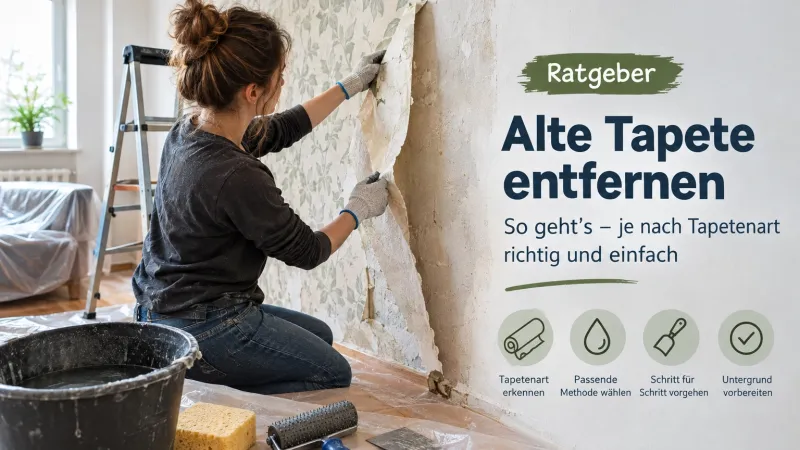
A new wallpaper is only as good as the surface underneath. Papering over old wallpaper risks bubbles, loose strips and seams showing through. The good news: with the right method, removal is usually quicker than expected. Which method suits depends on the wallpaper that is on the wall.
First: what wallpaper is on the wall?
Loosen a piece at a corner or seam and pull carefully:
- If the strip peels off dry in one piece and hardly any paper stays on the wall, it is usually a non-woven wallpaper.
- If only the top layer comes off and a thin paper layer stays stuck, you have a duplex or vinyl wallpaper.
- If the wallpaper tears into small pieces, it is a paper or woodchip wallpaper.
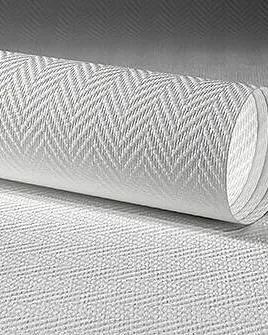
- If the surface is hard and fabric-like and often painted several times, it is probably glass fabric.
Preparation
- Move or cover furniture, protect the floor with plastic sheeting or cardboard.
- Switch off the fuse before working with water near sockets and switches; unscrew the covers.
- Have your tools ready: spatula or wallpaper scraper, bucket of warm water, brush or spray bottle, if needed a perforating roller, rubbish bags.
Non-woven wallpaper: peel off dry
Non-woven wallpapers are designed to be peeled off dry in whole strips. Loosen the strip at the bottom by the skirting board with the spatula and pull it off slowly and flat upwards. If individual spots stick, moisten them briefly and try again.
Paper and woodchip wallpaper: soak
- Perforate: run a perforating roller over the wall. The small holes let water get behind the surface. Do not press too hard so as not to damage the plaster.
- Soak: apply warm water generously with a brush or spray bottle. A dash of washing-up liquid or a wallpaper stripper from a specialist shop improves the effect.
- Let it work: a few minutes depending on the wallpaper; repeat for thick layers.
- Scrape off: work flat from bottom to top with the spatula. Only soak as much area as you can work on straight away.
Duplex and vinyl wallpaper: two layers
First peel off the top layer dry. The remaining paper layer is then soaked and scraped off like a paper wallpaper.
Several layers or stubborn wallpaper: steam
With several layers glued on top of each other or wallpaper that has been painted several times, a wallpaper steamer helps. The steam plate is held briefly against the wall, the steam dissolves the paste and the wallpaper can be scraped off. Be careful with plasterboard walls: too much moisture and steam can soften the paper facing – work sparingly and section by section.
Glass fabric
Glass fabric is very firmly bonded to the wall. It often makes more sense to leave it as a base and repaint it or – if it is firm and intact – to continue working on it after consulting a specialist. If it really has to come off, loosen it in strips with a spatula and steam. Wear gloves and long sleeves, as glass fibres can irritate the skin.
After removal: prepare the surface
- Remove residue: wash off scraps of paper and paste with warm water and a sponge.
- Let it dry: the wall must be completely dry before you continue.
- Check that it is sound: press adhesive tape on firmly and pull it off sharply. If paint or plaster sticks to it, the loose layer must come off.
- Fill: repair holes, cracks and edges and sand smooth once dry.
- Prime: even out very absorbent or unevenly absorbent areas (e.g. filled spots next to old plaster) with deep primer.
- Seal stains: water, nicotine or soot stains can bleed through light wallpapers. Treat such areas first with an insulating or stain-blocking primer.
The wall is then ready for the new wallpaper. How to hang non-woven wallpaper step by step is shown in the article How to hang non-woven wallpaper.
Wallpapering service in the Stuttgart area
If you would rather hand over the wallpapering: in the Stuttgart area and its immediate surroundings – for example Böblingen and Ludwigsburg – we hang the wallpaper for you. Please note that removing old wallpaper is not included in the price for the wallpapering; the wall should therefore be prepared, or the preparatory work is discussed separately. Prices can be found on the page wallpapering costs.
Frequently asked questions
Can I simply paper over the old wallpaper?
We advise against it. The moisture in the paste can loosen the old wallpaper, and seams or unevenness will show through. The next renovation also becomes twice as much work.
How do I get paste residue off the wall?
With warm water and a sponge. Soak stubborn residue again and remove it with the spatula. The wall must be clean and dry before re-papering.
Do I have to prime after removal?
Not always, but it usually makes sense. Do the water test: if water soaks in immediately or the wall absorbs unevenly, you should prime.
Leave a Comment